
Styling and Design
1931 - 2018
When Holden Motor Body Builders (HMBB) merged with General Motors Australia (GMA) in 1931 they not only established Australia’s leading automotive company but also formalised automotive design in this country.
The merged company Holden’s design section produced unique body styles, provided solutions not only for dust sealing, ventilation and motor body strength and also solved complex engineering problems with innovative design during WWII. By the mid-1940s the GM-H design group were capable of producing a complete Australian car and this expertise elevated the Holden design team to a position of respect within the GM Corporation.
The initial designers were trained internally by one man, Herbert Wylie, who understood that good body design lay in precise drawings and not a chalkboard. The team he built, with American input, applied considerable knowledge and expertise to ensure the Holden car, when released in 1948, was exactly what the Australian market wanted. Design at GM-H evolved from American practice but by a small team who were provided the opportunity to be innovative and progressive.
With the exception of the appointment of colour specialist Sandford around 1927, Holden had no formal Styling group, so in 1938 a young GM Stylist was despatched to Australia. Hartnett had agreed to Franklin Q. Hershey's trip, which he believed would assist GM-H to adopt the American approach to new model development, presentation and approval. Hershey’s trip to Australia took place from April to November 1938 and he reported that he was to ‘help organise a small styling staff there.
Further appointments were made in South Australia where Frank (Gill) Mathwin, Horace Alfred (Alf) Payze and Jack Burgan came together to form an art studio under Charles Phillips, then the Woodville body design engineer. Phillips reported to Rainsford, Woodville chief engineer who in turn reported to Pointer, GMH chief engineer at Fishermans Bend. Former engineering personnel, King Stuart and Tom Wylie moved to the production side of engineering, Stuart becoming the production engineer and Wylie the planning & tooling engineer. As the Australian car project started up in 1945, Hartnett moved Rainsford and his Woodville group to Fishermans Bend with Rainsford responsible for styling and body design. Phillips took on administration, Mathwin styling, Hall body design and Roper drafting. This was short-lived as an American engineering team, headed by Russell Begg, arrived in 1946.
The intervention of the American team has until recently obliterated the Australian contribution to the design of the 48-215. The Australian team who went to America and those who remained at Fishermans Bend in 1945 made a significant contribution. While the mechanical and chassis components were clearly of American origin, the body structure (apart from the unitary members- the front frame), packaging and trim development were almost exclusively Australian designed by Payze, Mathwin, Burgan, Kaye, Wylie, Abbott and Stacey.
With the arrival of Begg and his team of engineers along with the prototype Holdens in 1947, GM-H engineering doubled in size. In addition, draftsmen, experimental test drivers and fabricators were hired. A new engineering facility was erected to accommodate engineers, draftsmen, clerical staff, mechanics, machinists, panel workers, trimmers and painters. In 1952 the department again expanded, adding 50 new staff, additional equipment and an extended building. In February 1952 Charles Lewis replaced Begg as chief engineer, and by this time many American designers had returned home.
As 1952 closed, the Holden design team was preparing for the next new model, the FE Holden. This featured a radical restyle of the body with essentially the same mechanicals as its predecessor – the FJ Holden. Phillips with assistant Hall did the body design with Mathwin and Payze providing the styling.
The period 1917-1953 was one of both growth and development for Holden’s designers. The original team of five trainee body draftsmen had developed their skills at Holden, overseas and at technical institutions, to become capable of designing Australia’s top selling motor car by 1953. The five trainees would all leave their mark in the Australian automotive design field, they would also train and mentor the next round of engineers and stylists at Holden and other automotive companies. Holden’s design team was successful as it had access to the GM Corporation expertise but was left to develop innovative solutions that suited the local environment.
GM has fostered few design centres outside Detroit: Although Holden was the smallest, over time proved it was capable of producing world-class cars. The VB Commodore, VS Commodore and VE Commodore owe their success in large part to the heritage of innovative design that developed in the first 36 years. The, Holden’s design centre produced concepts such as the Holden Hurricane and show models equal to any design centre for GM divisions around the world.
(Adapted from a paper presented by Norm Darwin at the AHA Conference in 2016)
000OOO000
In late 2025, a group of HRC members travelled to Adelaide for a weekend immersed in Holden, especially the much-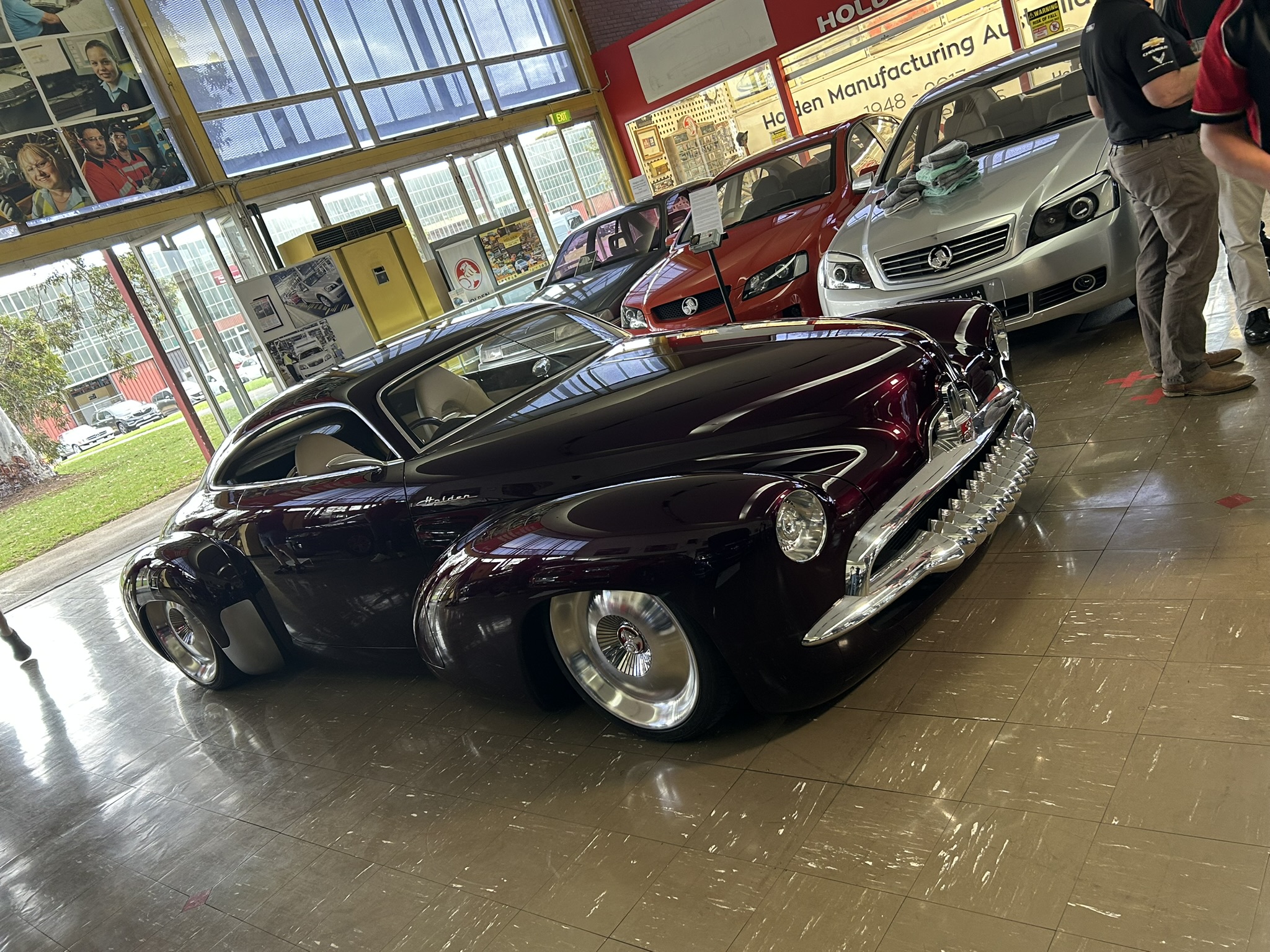 applauded Efijy concept car. They visited Birdwood Motor Museum, had meals with old friends from the Elizabeth Plant, and on Sunday, went to the Holden Manufacturing Heritage Centre in Elizabeth. There, they were treated to a presentation by the Designer who conceived the Efijy and carried it through to fruition, Richard Ferlazzo. The Efijy was also there in all its glory, with rumbling V8, to the delight of the audience. This is the story of the weekend, complete with an excellent video of Richard's presentation and even the sound of the 6 litre LS2 V8.
ooo000ooo
This page is divided into five sections (use links below):
| Year | Title | Description | Link |
| 1990 | Holden Product Design and Development | A series of brochures highlighting the capabilities of Holden Product design group to undertake work for outside customers | |
| 1997 | Holden Design | Brochure detailing the Design processes of the VT Commodore and acknowledgement of the efforts of the four disciplines which make up the Department: Design, Modelling, Technical Support and Colour & Trim | |
| 2016 | GM Holden Design Overview | Overview of the Design Team and their recent achievements. |
| Year | Contributor | Description | Link |
| 1903 -1950 | Norm Darwin | Holden's Role in Australian Automotive Design | |
| To 1940 | Norm Darwin | Australian Car Design - A brief history to 1940 | |
| 1923-1953 | Norm Darwin | The development of Australian Automotive Design (paper presented to the AHA conference 2016) |
| Contributor | Year | Description | Link |
| Hugh Healey | 1945 | Australian Seating Buck testing and approvals, May 1945 | |
| General Motors Corp. | 1963 | Procedure for Fabrication of Clay Buck Armature - Foam covered. | |
| Holden | 1992 | Four Holden Designers at the National Museum with their cars (see also Photos) | |
| Holden | 2014 | Chart of Directors of Design 1960-2014 with their projects. | |
| Peter Nankervis | 2020 | Clay Modelling before Computers (equipmnt mentioned can be seen in the following item) | |
| Holden | 1966 | Clay Modelling Equipment |
| Contributor | Year/s | Content | Link |
| Noel Bedford | c1934 | Reg Hall and Charflie Phillips in the Woodville Drawing Office | JPG |
| Holden | c1945 | Clay model of 48-215, side and front quarter views. Note ANZAC badging. | |
| Holden | 1946 | J Rawnsley with No 1 Prototype of the 48-215 at Milford Proving Grounds | |
| Peter Nankervis | c1962 | GMH Craftsman Guild Stand at South Australian Show. | JPG |
| Peter Nankervis | 1963 | Old Plant 3 Design Studio at work | JPG |
| Holden | 1964 | Brochure showing layouts of each floor of the new Technical Centre | |
| Peter Nankervis | 1964 | Peter Nankervis working on his mural No 2 for Tech Centre opening April/May, 1964 | JPG |
| Peter Nankervis | 1964 | Tech Centre Opening June 10 1964 - D.Veltman Sculpture | JPG |
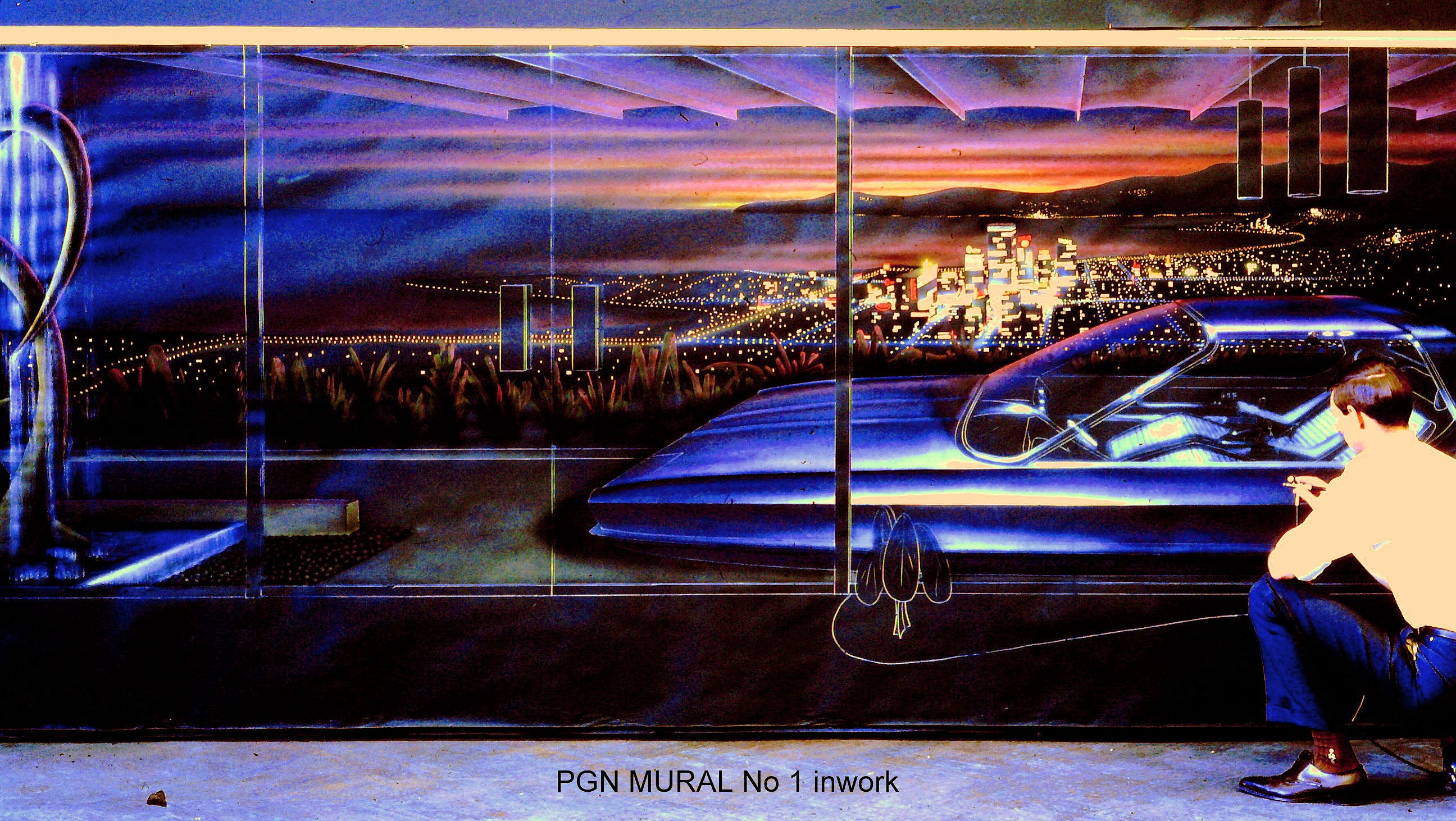
| Peter Nankervis | 1964 | Tech Centre Opening - Peter Nankervis Mural No 1 in work | JPG |
| Peter Nankervis | 1964 | Tech Centre Opening - Peter Nankervis Mural No 1 in work | JPG |
| Peter Nankervis | 1964 | Tech Centre Opening - Peter Nankervis Mural No 1 | JPG |
| Peter Nankervis | 1964 | Tech Centre Opening - Peter Nankervis Mural No 2 | JPG |
| Peter Nankervis | 1964 | Tech Centre Opening - Ron Fimmel Mural | JPG |
| Peter Nankervis | 1964 | Tech Centre Opening - Dan Brown with his Mural | JPG |
| Peter Nankervis | 1964 | Tech Centre Opening - Don Brown's full scale EH Interior | JPG |
| Peter Nankervis | 1964 | Tech Centre Opening - Tom McCormick with his Design Concept | JPG |
| Peter Nankervis | 1964 | Tech Centre Opening - No 1 Design Studio Team | JPG |
| Peter Nankervis | 1964 | Tech Centre Opening - No 1 Design Studio Team / PGN Mural | JPG |
| Peter Nankervis | 1964 | Tech Centre Opening - No 1 Design Studio - Harry Mitchell |
JPG |
| News | 1964 | The birth of a car (Tech Centre opening supplement - The Sun June 26, 1964 | |
| Noel Bedford | 1965 | Seating Buck setup | JPG |
| Noel Bedford | 1965 | Interior Studio | JPG |
| Noel Bedford | 1965 | Noel Bedford in Seating Buck | JPG |
| Noel Bedford | 1965 | Seating Buck | JPG |
| Doug Mennie | 1969 | The Holden Hurricane, code named RD-001 - Cartoon of Assembly 2 by Hurrican Designer, Don Daharsh | |
| Doug Mennie | 1969 | The Holden Hurricane, code named RD-001 - Cartoon of Assembly 3 | |
| Noel Bedford | 1970 | Design Staff in the 1970's | JPG |
| Noel Bedford | c1970 | Interior Studio and staff | JPG |
| Noel Bedford | c1970 | Interior Studio and staff | JPG |
| Noel Bedford | c1975 | Interior Studio and staff | JPG |
| Noel Bedford | c1975 | Farewell to Ted and marg Schroeder and John Schineller | JPG |
| Noel Bedford | c1975 | Farewell to Ted and Marg Schroeder and John Schineller | JPG |
| Peter Nankervis | 1975 | Opel V-Car trip - Fog bound on the Autobahn | JPG |
| Peter Nankervis | 1975 | Opel V-Car trip - Afternoon Tea at Wiesbaden |
JPG |
| Peter Nankervis | 1975 | Opel V-Car trip - Lunch at Triberg | JPG |
| Neil Pogson | 1976 | Don Brown produced cartoon presented to Lloyd Beck on his resignation from Holden. | |
| Peter Nankervis | 1978 | Executive Seminar No 16 group, November 1978 | JPG |
| Noel Bedford | 1980 | Design Staff in the 1980's | JPG |
| Holden | c1980 | Design Staff, named | JPG |
| Noel Bedford | 1983 | Leo Pruneau's farewell, September 1983 | JPG |
| Holden | c1985 | Director of Design Leo Pruneau with Executive Dining Room Supervisor, June Sawtell | JPG |
| Noel Bedford | 1988 | Design Staff with VN Sedan | JPG |
| Noel Bedford | 1988 | Design Staff with VN Sedan | JPG |
| Noel Bedford | 1988 | Design Staff with VN Sedan and Caprice | JPG |
| Holden | c1990 | Four Holden Design Chiefs: Alf Payze, Joe Schemansky, Leo Pruneau and Phil Zmood. | JPG |
| Holden | c1990 | Alf Payze, Holden Design Chief | JPG |
| Holden | c1990 | Joe Schemansky, Holden Design Chief | JPG |
| Peter Churchill | c1995 | Peter Churchill with Holden Design concept proposal for VN Commodore | JPG |